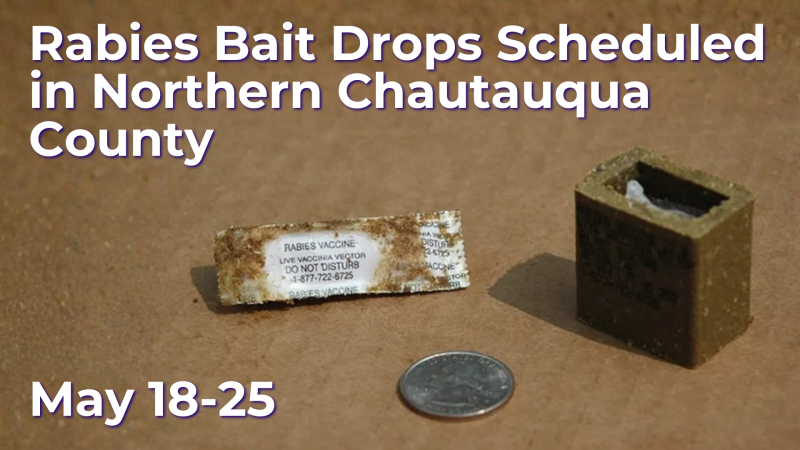
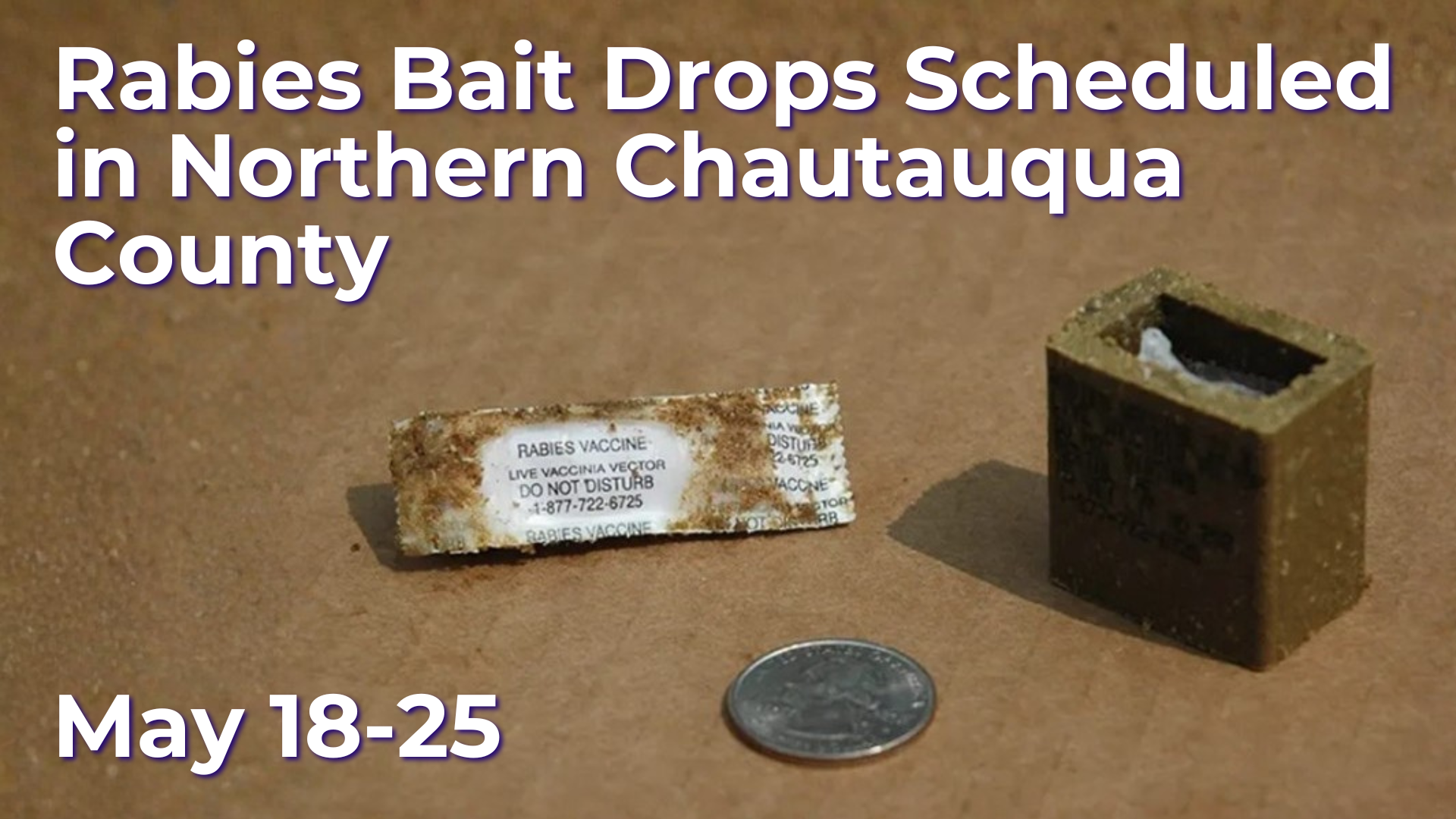
MAYVILLE, NY – A rabies prevention campaign will take place in areas of northern Chautauqua County the week of May 18 - 25. Small baits containing rabies vaccine will be dropped from fixed wing airplanes.
This effort is coordinated by the U.S. Department of Agriculture (USDA) as part of a nationwide strategy to prevent the spread of raccoon rabies across the continental United States. As part of this initiative, field evaluation of a new Oral Rabies Vaccine (ORV) is occurring throughout Western New York from May 4–25, using both aerial and hand distribution methods.
In Chautauqua County, bait distribution will occur only by aircraft between May 18–25, with exact timing dependent on weather and logistical factors. Baits will be dropped exclusively in the northern portion of the county. The southern boundary of the bait zone includes the Village of Brocton and the towns of Portland, Arkwright, and Villenova. The USDA determines all baiting locations.
“Humans and pets do not get rabies from contact with the baits. People who find them should leave them undisturbed so wildlife can consume them and receive the vaccine,” said Jessica Wuerstle, Chautauqua County Director of Environmental Health. “If you do come into contact with a bait, wash the area with soap and warm water. If a pet picks up a bait, there is no cause for concern—the baits are designed to be safely consumed by wildlife.”
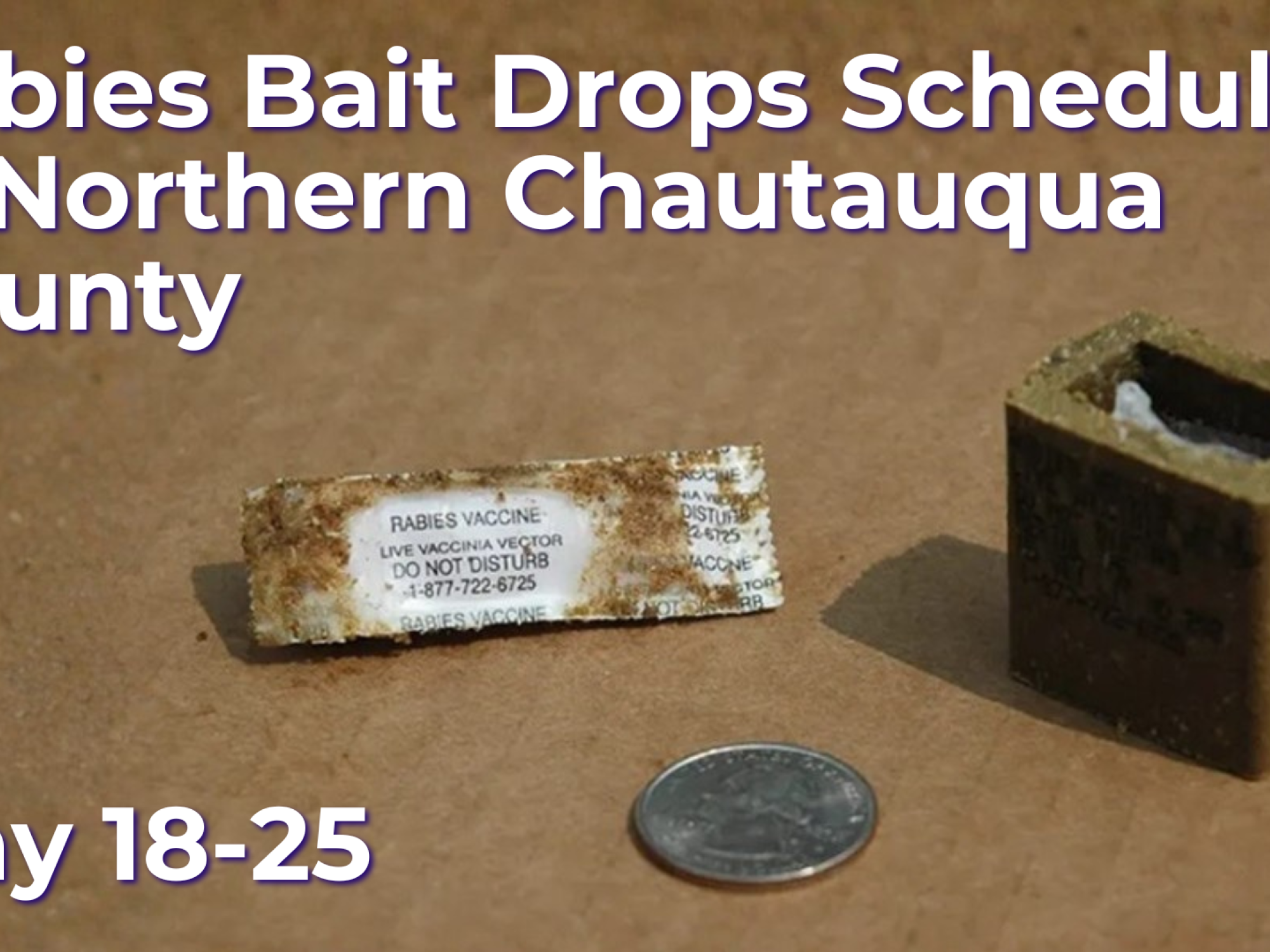
The baits include a sealed plastic pack which holds the vaccine. The packs are surrounded with a sweet substance that includes fishmeal, vegetable-based fats, wax, icing sugar, vegetable oil, artificial marshmallow flavor and/or dark-green food dye. The baits are designed to be appealing to wildlife so animals will eat the bait and pierce the plastic pack, which will expose the animal to the vaccine.
“Rabies remains a serious public health concern in our region,” Wuerstle added. “Residents—especially those who spend time outdoors—should avoid contact with wildlife whenever possible. It is also essential to keep pets up to date on rabies vaccinations, particularly those that roam freely, such as barn cats and dogs.”
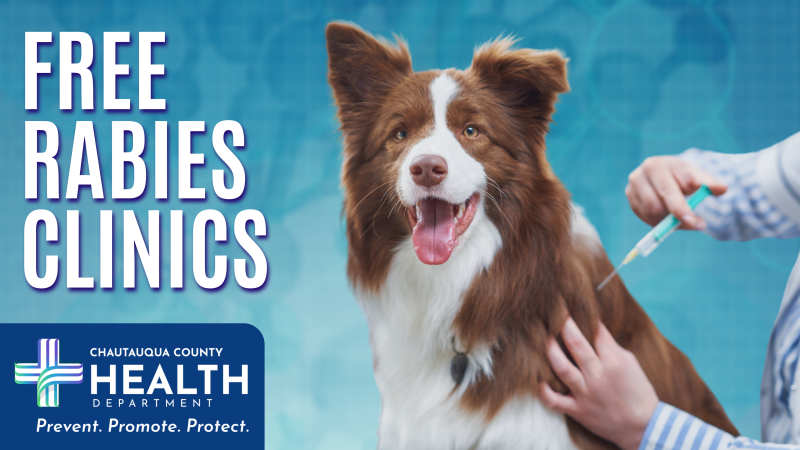
The Chautauqua County Health Department partners with local municipalities to offer free rabies vaccination clinics for pets throughout the year. Current clinics are listed on our website at HealthyCHQ.com/Rabies. Residents are encouraged to contact their local municipal officials to inquire about scheduling a clinic in their area.
Rabies-infected animals may display a range of symptoms. Some may act aggressively and attack without provocation, while others may appear unusually tame. Residents are urged not to approach or attempt to help wild or feral animals. Handling or bringing wildlife into the home is both dangerous and illegal, and may result in potential rabies exposure for household members.
If contact with a wild animal is unavoidable—such as removing a bat—the Health Department recommends wearing thick, puncture-resistant gloves and protective clothing to prevent bites or scratches. Rabies is nearly always fatal once symptoms develop, making prevention critical.
According to the Centers for Disease Control and Prevention (CDC), more than 90 percent of rabies cases reported in the United States occur in wildlife. The USDA’s Wildlife Services National Rabies Management Program, established in 1997, works to contain and eliminate rabies in wildlife populations, with a primary focus on raccoon rabies.
For more information about the program and to view a map of bait distribution areas, visit:
www.aphis.usda.gov/national-wildlife-programs/rabies
Residents with questions about the federal program can contact USDA Wildlife Services at 1-866-4USDA-WS (1-866-487-3297).
For county-specific questions, contact the Chautauqua County Health Department’s Environmental Health Division at (716) 753-4481.
About Chautauqua County Health Department - The Chautauqua County Health Department is the leading Public Health organization in Chautauqua County dedicated to the support of the community’s health. The Health Department takes innovative approaches to provide technical assistance to partner organizations, and offers various programs and services in order to help prevent disease, protect the public’s health and promote our community’s overall health and wellness. For more information visit www.HealthyCHQ.com.