

- Bites from ticks can make you sick!
- They can spread germs that cause diseases like Lyme, Anaplasmosis, Babesiosis, and Ehrlichiosis.
- Lyme disease is the most common tick related disease in Chautauqua County and the northeast.
- Learn how to protect yourself and your loved ones from ticks.
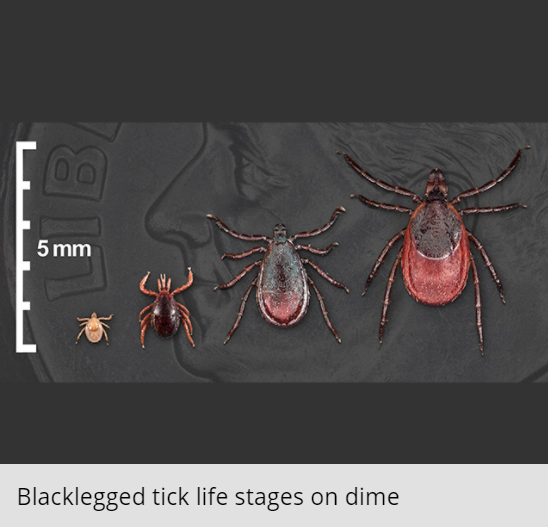
The blacklegged tick, also known as the deer tick, is the most common tick found in Chautauqua County.
Avoid exposure
- Wear long clothing with pants tucked into boots
- Choose a tick and insect repellent that works best for you while being active outdoors
- Always follow the labeling instructions for the proper use of tick and insect repellents and consult your physician about possible reactions to different repellents
- You should also consult your physician prior to using repellents on small children
- Do tick checks at the end of outdoor activities on yourself, your kids, your outdoor companions, etc.
- Shower after a day of outdoor activities to help wash away any critters that may not be attached yet.
- Wash clothes worn outside and put them in the dryer. Taking clothes off and leaving them in a pile on the bedroom floor carries the potential to bring ticks into the home.
- Check pets for ticks because most pets spend time on couches, beds, etc. where ticks could find their way to their human companions.
- Maintain yards so you don’t attract ticks and mosquitoes.
- Keep brush and weeds mowed.
- Eliminate standing water that can act as mosquito breeding pools
How to remove an engorged tick
Ticks should be removed as soon as possible to avoid risk of infection. In general, infected ticks must be attached for more than 24 hours to transmit infection. By removing a tick within 24 hours you can greatly reduce your chances of getting Lyme disease.
- Use tweezers to grasp the mouth parts of the tick as close to the skin as possible
- Pull steadily and firmly upward until the tick lets go
How to clean a tick bite
Once the tick is properly removed:
- Clean the bite area with soap and water
- Apply antiseptic, alcohol, or hydrogen peroxide
- Contact your physician
Tick-borne diseases found in WNY:
Lyme Disease
Lyme disease is the most common tick related disease in Chautauqua County and the northeast and is transmitted by a blacklegged (deer) tick bite. It may cause symptoms effecting the skin, nervous system, heart and/or joints of an individual. Early symptoms usually occur within a month of exposure, frequently as a circular, or "bullseye" rash with a clear center area. Fever, headache, fatigue, stiff neck, and muscle or joint pain are other early warnings. Visit the CDC's website for a complete list of symptoms.
Seek medical attention if you observe any of these symptoms and have had a recent tick bite.
Anaplasmosis, Babesiosis, and Ehrlichiosis
In more recent years, Chautauqua County has seen cases of Anaplasmosi, Babediosis and Ehrlichiosis. Learn more about these tick-borne diseases and their symptoms here.
I found a tick, should it be tested?
No. People who have removed a tick sometimes wonder if they should have it tested to see if it is infected. Although some commercial groups offer testing, in general this is not recommended, because:
- Laboratories that conduct tick testing are not required to have the high standards of quality control used by clinical diagnostic laboratories. Results of tick testing should not be used for treatment decisions.
- Positive results showing that the tick contains a disease-causing organism do not necessarily mean that you have been infected.
- Negative results can lead to false assurance. You may have been unknowingly bitten by a different tick that was infected.
- If you have been infected, you will probably develop symptoms before results of the tick test are available. If you do become ill, you should not wait for tick testing results before beginning appropriate treatment.
Learn more: