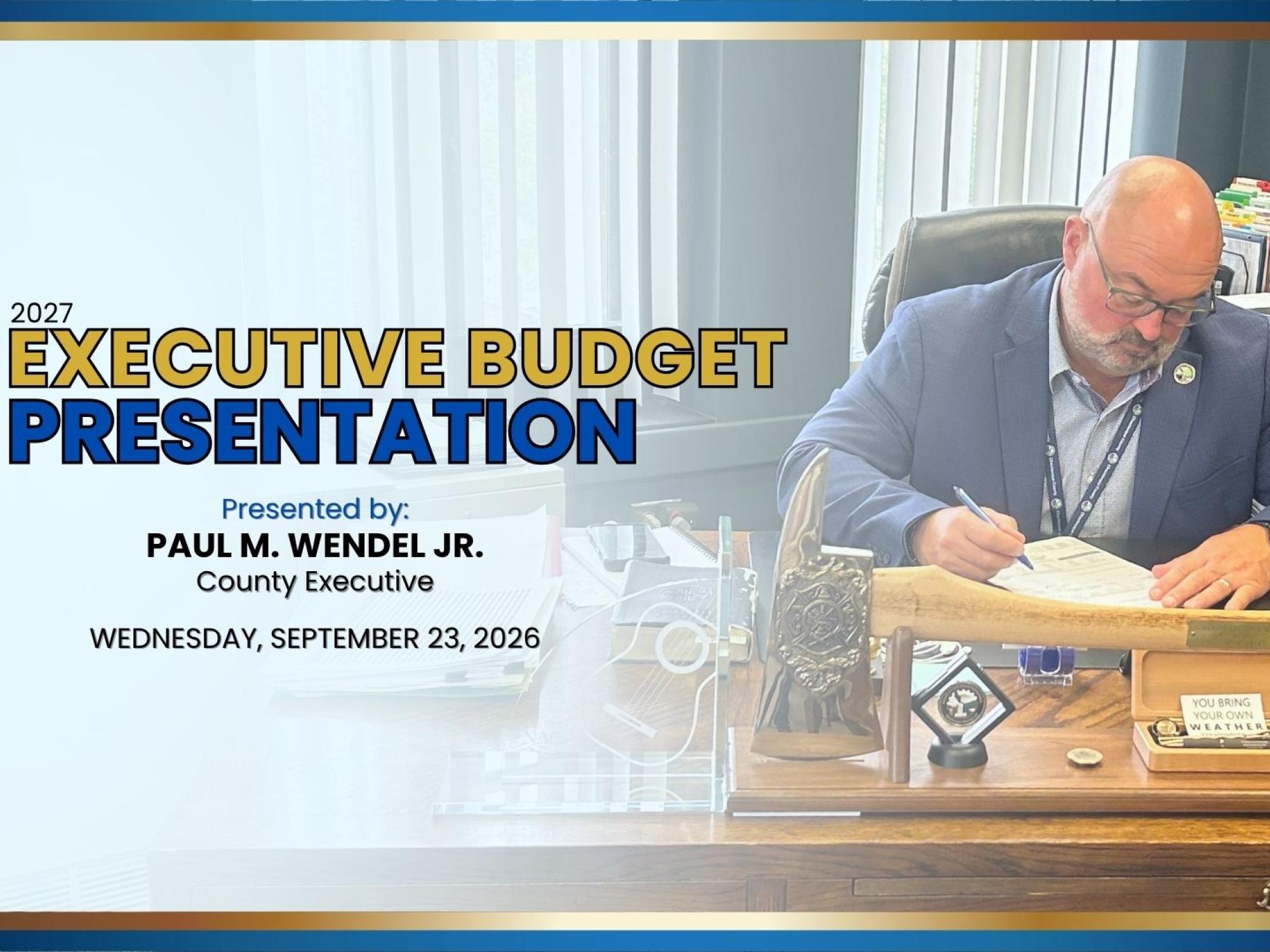
MAYVILLE, N.Y. — Chautauqua County Executive Paul M. Wendel Jr. presented his 2027 Tentative Executive Budget to the Chautauqua County Legislature Wednesday evening, outlining a spending plan focused on affordability, maintaining county services, strengthening the county’s financial position and investing in the infrastructure and communities that support residents across Chautauqua County.
The proposed $330 million budget maintains the County’s commitment to fiscal responsibility while addressing rising costs, state-imposed mandates and the financial pressures facing households throughout the county.
A central component of the proposal is a flat county property tax levy and a proposed property tax rate of $5.32 per $1,000 of assessed value, a decrease of $0.85 from the previous year. This marks the seventh consecutive year Wendel has proposed lowering the county tax rate, bringing it to its lowest proposed level since the 1976 budget, which was proposed and adopted in 1975 as the first budget introduced by a Chautauqua County Executive.
“Every dollar matters to the families, small businesses and seniors who call Chautauqua County home,” said County Executive Wendel. “Our responsibility is to protect the services our residents rely on, make responsible decisions with taxpayer dollars, and ensure county government remains affordable and prepared for the challenges ahead.”
The proposed budget was developed amid rising costs and significant unfunded mandates. Wendel noted that Chautauqua County is required to administer and finance more than 40 state-defined programs, with unfunded mandates projected to cost county taxpayers more than $113 million in 2027. The budget also accounts for new costs associated with the administration of the Supplemental Nutrition Assistance Program (SNAP).
Despite these pressures, the proposed spending plan maintains a focus on long-term financial stability. The county expects to maintain a fund balance of approximately 6.3 percent, within the 5 to 15 percent range outlined in its Financial Management Plan. Wendel credited fiscally conservative budgeting in previous years and the support of the County Legislature with helping position the county to address current challenges while maintaining services.
“Responsible government means making smart decisions today so we can protect the financial stability of Chautauqua County tomorrow,” Wendel said. “We have worked to preserve our reserves, control spending and find efficiencies so that we can continue providing the services our residents need without placing an unnecessary burden on local taxpayers.”
The 2027 budget allocates funding across several major areas of county government. Human services account for 49 percent of expenditures, followed by public facilities, including water and sewer districts, at 20 percent; public safety at 20 percent; administrative services at 8 percent; and planning and economic development at 2 percent.
The proposal also includes more than $17 million in capital projects through the Department of Public Facilities. Additional investments include more than $70,000 in upgrades at Jamestown Community College, $310,000 for economic development and more than $700,000 in public safety improvements through the Sheriff’s Office and Department of Emergency Services.
Wendel also highlighted efforts to reduce costs through operational efficiencies and contract negotiations. A review of a major vendor contract resulted in the county securing the same level of coverage while reducing costs.
“Finding savings does not always mean reducing services,” Wendel said. “By challenging existing costs, negotiating responsibly and looking for better value, we can protect taxpayer dollars while continuing to meet the needs of our residents.”
The proposed budget also includes continued investments in local communities and initiatives designed to support long-term affordability. Wendel highlighted the county’s Government Reduction Initiative, launched in 2026 to help municipalities explore voluntary mergers, consolidations and shared services. The initiative is intended to help communities address upfront costs associated with efficiency efforts while reducing duplication and improving the delivery of services.
The budget further proposes an additional $100,000 for the county’s lake maintenance fund, bringing planned occupancy tax-supported investments into focus as part of the county’s ongoing efforts to support local lakes, tourism and community quality of life.
Wendel also addressed the financial impact of state-imposed mandates and outlined his continued advocacy through the New York State Association of Counties. He said he will work with county leaders from across the state to seek state support for the additional costs associated with SNAP administration and other mandates.
“Chautauqua County cannot control every cost we face, but we can control how we respond,” Wendel said. “I will continue working with our state and local partners to protect taxpayers, push back against unfunded mandates, and make sure the people of Chautauqua County have a strong voice in the decisions that affect their communities.”
Wendel concluded his address by reaffirming his administration’s commitment to protecting essential services, strengthening county finances, expanding opportunity and maintaining Chautauqua County’s affordability.
“This budget is about people,” Wendel said. “It is about protecting what matters, strengthening what works, expanding opportunity and keeping Chautauqua County affordable. We will continue to invest in our communities, support our families and build a future where businesses can grow and residents can thrive.”
The 2027 Tentative Executive Budget will proceed through the County Legislature’s budget review and approval process. Additional information about the proposed budget is available at chautauquacountyny.gov/2027Budget. For more updates from Chautauqua County Executive PJ Wendel, visit chautauquacountyny.gov/county-executive/welcome and follow him on Facebook at @CountyExecutiveWendel.