Enjoy Chautauqua County's Lakes and Waterways Safely

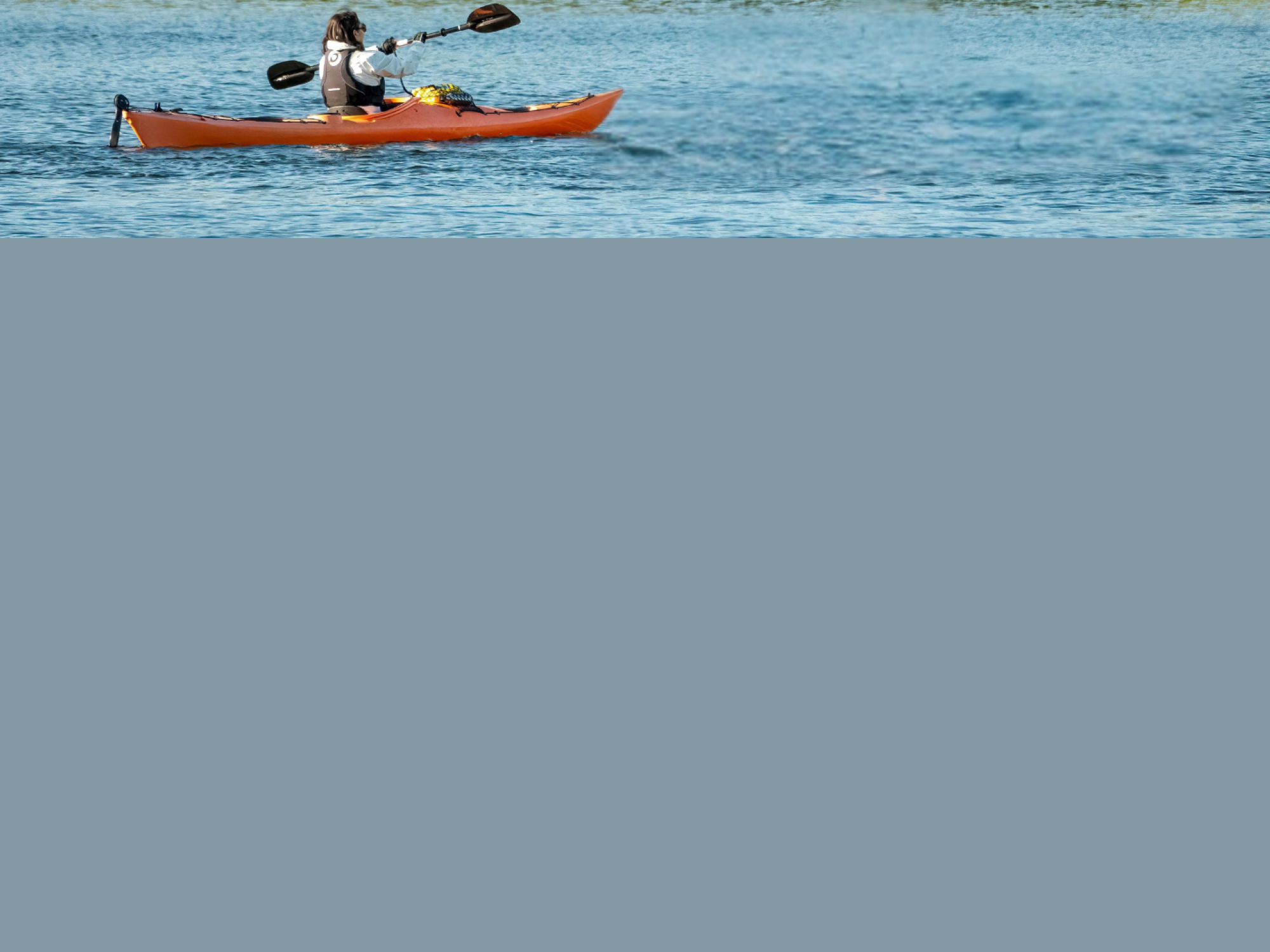
Summer is the perfect time to enjoy Chautauqua County's beautiful lakes and waterways. Whether you're swimming, boating, kayaking, paddleboarding, fishing, or simply relaxing by the water, taking a few simple precautions can help keep you, your family, and your pets safe.
Before heading out, check current beach conditions and learn how to recognize harmful algal blooms (HABs), also known as blue-green algae.
Before You Go |
Beach Status |
Water samples are collected weekly or every other week during the swimming season, depending on the beach.
The table below shows the most recent water quality results for permitted public beaches.
Table Updated: September 14, 2026 |
Keep in mind: A satisfactory water quality result does not always mean a beach is open. Beaches may close for other safety reasons. Always check signs posted at the beach before entering the water.
Lake Erie Beaches | ||
| Beach Location | Date | E. coli Result - Comments |
| Town of Hanover, Irving | Closed for 2026 Season | |
| Sunset Bay, Irving | Closed for 2026 Season | |
| Wright Park, Dunkirk | Closed for 2026 Season | |
| Point Gratiot, Dunkirk | Closed for 2026 Season | |
Chautauqua Lake BeachesLocalized harmful algae blooms have been observed on Chautauqua Lake - see links below to learn more. | ||
| Long Point State Park | Bacteria Results and blue-green algae closure notifications are available on the NYS Parks website. | |
| Mayville Lakeside Park | Closed for 2026 Season | |
| Children's Beach, Chautauqua Institution | Closed for 2026 Season | |
| College / Pier Beach, Chautauqua Institution | Closed for 2026 Season | |
| Heinz Beach, Chautauqua Institution | Closed for 2026 Season | |
| Lakewood Village Beach | Closed for 2026 Season | |
Cassadaga Lakes Beaches | ||
| Cassadaga Village Beach | Closed for 2026 Season | |
| Lily Dale Beach | Closed for 2026 Season | |
Findley Lake BeachesLocalized harmful algae blooms have been observed on Findley Lake - see website links below to learn more. | ||
| Private Facility | Closed for 2026 Season | |
| Private Facility | Closed for 2026 Season | |
Harmful Algal Blooms (Blue-Green Algae) |
What are Harmful Algal Blooms? |
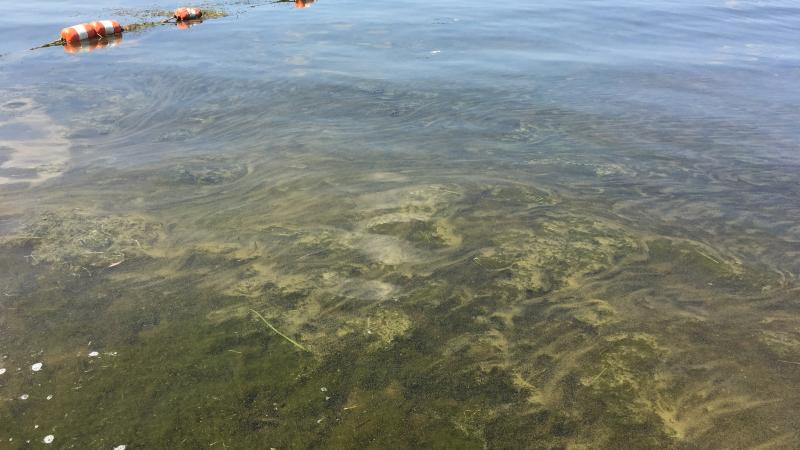
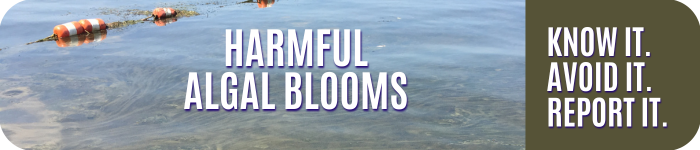
Blue green algae, also known as cyanobacteria, is naturally occurring and may grow quickly in warm, nutrient-rich water to create areas that are commonly called harmful algal blooms (HABs).
Some blooms produce toxins that may cause skin irritation and can make people and animals sick.
Anyone can be exposed by:
- Skin contact while swimming, wading, splashing.
- Drinking untreated lake water.
- Accidentally swallowing water.
Pets are especially at risk because they may drink contaminated water or lick the HAB material from their fur.
Know It. Avoid It. Report It. |
| Know It. |
Learn to recognize the signs of a possible harmful algal bloom. Learn how to tell the difference between harmless green algae and other aquatic plants, which do not post health risks, and blue green algae which may produce toxins.
A bloom may look like:
- Green paint spilled on the water
- Thick pea soup
- Blue-green streaks
- Floating mats or surface scum
Remember: You cannot tell if a bloom is toxic just by looking at it.
| Avoid It. |
➡️ NYS HABs Mapping System - View confirmed harmful algal bloom reports in Chautauqua County and across New York State
If you think a bloom is present:
- Do not swim or wade in the water.
- Keep children and pets away.
- Do not drink untreated lake water.
- Avoid boating or other activities that may create water spray.
- Do not eat fish caught from areas with visible blooms.
- If you accidentally come into contact with a bloom, rinse off with clean water as soon as possible.
When in doubt, stay out.
| Report It. |
If you see something that looks like a harmful algal bloom, help protect others by reporting it to the New York State Department of Environmental Conservation (NYSDEC).
Reports should include:
- The location
- Photos of the bloom (try to avoid glare in your photos)
- Any other helpful observations
Learn More |
Explore these resources for more information:
- NYS Department of Health – Learn how to identify harmful algal blooms and what to do if you think you've been exposed.
- NYS Department of Environmental Conservation (NYSDEC) – View photos of different types of algae and learn how to identify HABs.
- NYS HABs Mapping System – View confirmed harmful algal bloom reports across New York State.
NYSDEC HABs Reporting Survey – Report a suspected harmful algal bloom.
For Healthcare Providers |
Healthcare providers looking for information about illnesses related to harmful algal bloom exposure can review the Centers for Disease Control and Prevention (CDC) Physician Reference Guide, which summarizes health risks, symptoms, diagnosis, and treatment considerations.
FAQs |

Beach Water Quality |
The Chautauqua County Health Department (CCHD) regularly monitors permitted public swimming beaches for:
- E. coli bacteria, which is used as an indicator of general water quality
- Harmful algal blooms (HABs)
If testing shows that water is unsafe for swimming, CCHD will communicate with the beach operator to close the beach until follow-up testing confirms it is safe to reopen.
Please note: Beaches may also close for reasons unrelated to water quality, such as severe weather, staffing shortages, or other safety concerns.
Why Are Beaches Closed? |
A beach may be temporarily closed when:
- E. coli bacteria levels exceed New York State Department of Health safety standards.
- A harmful algal bloom (HAB) is present.
High bacteria levels can increase the risk of illness, especially if you:
- Swallow lake water
- Have open cuts or wounds
- Have a weakened immune system
When CCHD closes a beach because of water quality, the operator is required to post signs at the beach to notify visitors.
Additional Resources |
- U.S. Environmental Protection Agency (EPA) – Beaches
- CDC – Swimmer's Itch Frequently Asked Questions
- NYSDOH Information Bulletin (PDF)
- Chautauqua Lake Communities Drinking Water Protection Plan